
OUTLOOK EYE TREATMENTS

Corneal Collagen Cross Linking

Cross Linking is a procedure with strengthens the links between these layers, preventing it from deforming any further.

What is Corneal Collagen Cross Linking?

The cornea (kaw-nee-uh) is made up of many thin layers, organised like many thin pieces of paper on top of each other.

Each layer is linked to the above and below layer to provide strength to the cornea.

In conditions such as keratoconus, these links between layers are weak, which allows the cornea to bend and bulge, causing the abnormal shape of the cornea which leads to poor vision.

Cross Linking is a procedure with strengthens the links between these layers, preventing it from deforming any further.

The procedure is done through the interaction of riboflavin (vitamin B2) drops and a special type of UV-A light.

Following the procedure, the cornea is stronger and resists any further changes in shape, stabilising the vision of someone with Keratoconus.
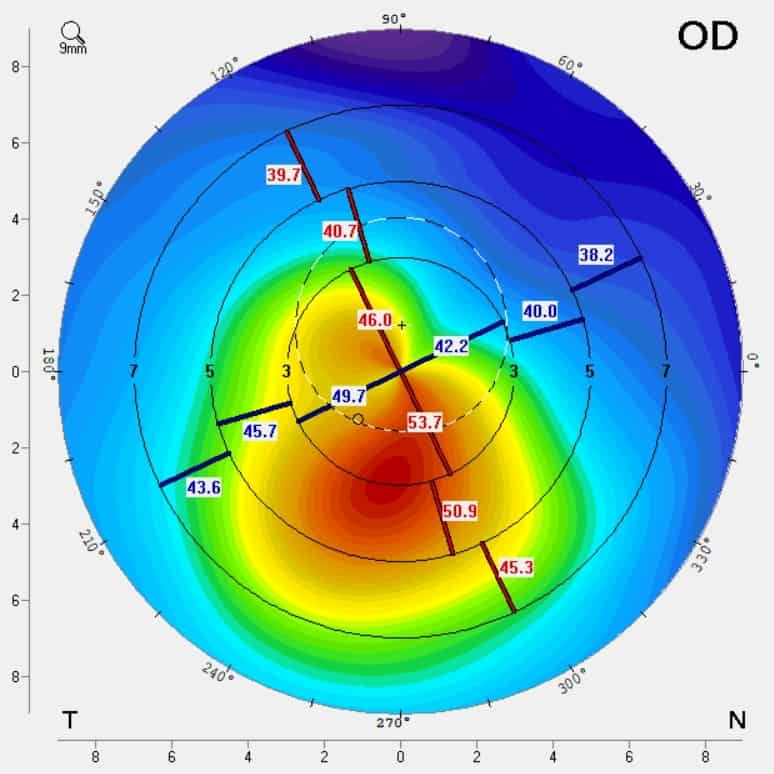
KCN R eye Pentacam

How is Corneal Collagen Cross Linking performed?

It is performed in the clinic and takes approximately 40 minutes. You will lie flat on a bed for the procedure. The first step is to make a small abrasion on the surface of the cornea to help the eyedrops absorb into the cornea. When enough drops have absorbed, the UV light will be switched on and the treatment will commence.
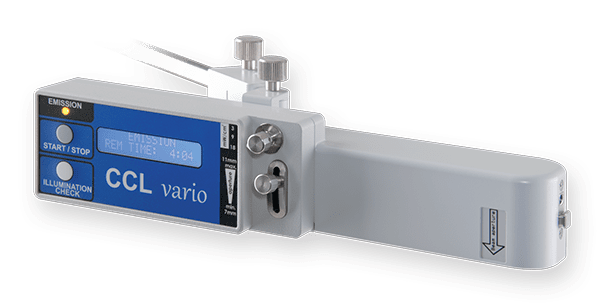
CCL-Vario-300

What is the benefit of Corneal Collage Cross Linking?

Studies show that by performing cross linking, it will halt progression of keratoconus in 95% of cases. This may mean that people avoid requiring stronger and stronger glasses, contact lenses and in some cases, avoid the need for surgery

What is the recovery time after Corneal Collage Cross Linking?

The eye is quite uncomfortable for the first 3 days but then settles. Most patients can return to work, school or study 4 days after having corneal collagen cross linking performed.  

For more information on keratoconus you may wish to visit: https://www.keratoconus.org.au/

Download Factsheet

Helpful Links: Intense Pulse Light, Epiretinal Membrane, Macular Hole, Central Serous Chorioretinopathy, Allergic Eye Disease, Keratoconus

Frequently Asked Questions

Corneal collagen cross linking (CXL) is a minimally invasive procedure that strengthens the cornea by creating new bonds between its collagen fibres. Riboflavin (vitamin B2) drops are applied to the cornea and activated by controlled ultraviolet-A light, producing new collagen cross links that stiffen and stabilise the cornea.
Cross linking is primarily used to halt the progression of keratoconus, a condition where the cornea progressively thins and distorts. It is also used to treat post-LASIK corneal ectasia and other forms of corneal thinning. Cross linking does not reverse existing corneal distortion but stops further deterioration in approximately 95% of cases.
Cross linking is a stabilising procedure, not a vision-correcting one. Its goal is to stop keratoconus from getting worse, not to improve existing distortion. Some patients experience a small improvement in vision and corneal shape over the months following cross linking, but this is not guaranteed. Additional procedures such as CAIRS may be considered separately to improve vision.
The corneal epithelium is gently removed under topical anaesthetic (epithelium-off technique). Riboflavin drops are instilled every minute for 15 minutes. The cornea is then exposed to a calibrated UV-A light source for 10 minutes. The procedure takes approximately 30-45 minutes in total.
The procedure is performed under topical anaesthetic and is not painful. However, the days following the procedure, while the epithelium heals, can be quite sore, similar to a corneal abrasion. A bandage contact lens is worn for 3–5 days to ease this discomfort. Pain relief and lubricating drops are prescribed.
The surface epithelium heals within 3–5 days. Vision may fluctuate for 2-3 months as the cornea heals and the new cross links consolidate. Most patients return to desk-based work within 5–7 days. Contact lens wear should be avoided until the epithelium has fully healed.
Cross linking is most commonly performed in teenagers and young adults whose keratoconus is actively progressing. It can be performed in younger patients if progression is documented. Older patients with keratoconus often have stable disease that does not require cross linking. Your ophthalmologist will assess whether your condition is progressing before recommending treatment.
Yes. Cross linking is often combined with CAIRS (Corneal Allogenic Intrastromal Ring Segments) or laser surgery (PRK) in a same-day or staged procedure. Cross linking stabilises the cornea while CAIRS or PRK helps reshape it and improve vision. This combination offers both disease stabilisation and visual rehabilitation.
Cross linking is a safe procedure with a well-established safety record. Risks include temporary corneal haze (which usually resolves within 6–12 months), infection, and in rare cases a reduction in corneal clarity. Vision may temporarily decrease in the first few months before stabilising and then improving.
Corneal cross linking attracts a Medicare rebate when performed by a specialist ophthalmologist with a valid referral. Hospital and anaesthetic fees may apply. Our team will provide a detailed cost estimate at your consultation.